Note: This site is moving to KnowledgeJump.com. Please reset your bookmark.
Completing the Zen in Performance Management
Performance Management is a long term process that focuses on continuous performance improvement or “change” for short. Its goal is to create a climate of shared understanding about what is to be achieved, and then developing people to increase the chance that it will indeed be achieved.
A lot of people associate performance management with the annual performance review. While it can and often does include performance reviews, it goes far beyond it in that performance management looks at improving performance as a daily activity, rather than just a semi-yearly or yearly event. In addition, some people relate performance management with Taylor's Scientific Management. However, Taylor's method focuses mainly on the time and motion studies of processes; while performance management is more about focusing on people, or to be more exact — helping people to develop so they can perform in an ever changing world.
Yet, developing people or having them change can often be quite difficult at times.
When you loose small mind,
You free your life.
Life is a waterfall,
We drink from the river,
Then we turn around and put up our walls.When you free your eyes.
Internal prize.
— Aerials by System of a Down
People tend to have a small or closed mind when it comes to new ideas or change. However, if we do more than take a small “drink” from a new ideal, we can build from it. Yet, like the song, if we only take small sips, then we end up returning to our old ways of doing things by building walls. To keep the new way (change), we need to immerse ourselves in the waterfall of change; rather than just sip from it.
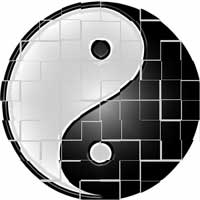
While a lot of the literature only looks at the “Yin” side of performance management, such as improving processes and creating procedures; this commentary will focus more on the opposite side or “Yang” side — the people.
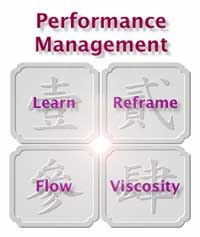
To do that, it will focus on four aspects on managing the human side of performance management: learning, reframing, flowing, and viscosity.
Learning Verses Rejection of New Ideas
In a great audio file (MP3), titled, Human Nature, Malcolm Gladwell, the author of The Tipping Point and Blink, explores why we can't trust people's opinions — he believes we don't have the language to express our feelings. He gives several examples, to include Herman-Miller's Aeron chair that became the best-selling chair in the history of office chairs . . . it succeeded in spite of the research that suggested it would fail.
 When the Aeron chair was first introduced, people thought it was one of the most comfortable chairs they ever sat in, yet they also thought it was quite ugly looking. When people first saw and sat in the chair, they commented that they might consider such a chair once the designer finished it! However, after people used it for a while, they become quite accustomed with the look of it. So much in fact that they actually began to think of it as, well . . . good-looking. Gladwell believes there are two main reasons:
- Our preferences are quite unstable, especially when we are first introduced to something new. This is because we need time to learn about the new object or idea.
- We also tend to make up stories by picking up subtle clues when we are introduced to something new. This is because we do not have the language to talk about something new, radical, or daring.
We often say that people don't like change, yet if given a chance to learn about a new innovation or process, people will see the beauty in the idea if given a chance to learn about it. First impressions will threaten to derail innovation simply because people do not have the initial context to judge it, thus new ideas must be presented in ways that allow the users to learn about it, such as through prototypes, models, and trial and error.
Lesson Learned: Performance Management requires that people be given plenty of time to learn about the new idea or change.
Reframe for the Holistic
Performance Management is the ability to change people's behavior. But why does it seem so hard at times? Science has come up with a few surprising answers to this perplexing problem.
In an article by Fast Company, they tell the story of coronary-artery bypass patients who have surgery to relieve pain, rather than to cure them. In fact, the only real cure is for them to start taking better care of themselves, such as quit smoking, eating less, and exercising. Yet, in study after study very few do! When these patients are looked at two years after their surgery, 90% have not made any significant change to their lifestyle.
Here are people facing a life or death situation, yet they fail to make the right choice, thus they face more pain, more surgeries, and possibly death. How can we expect leaders to change people when they will not even change themselves when faced with a major personal crisis?
John Kotter, a Harvard Business School professor says that you need more than careful analysis, measurement tools, and management to help someone make a behavioral change; what you actually need to do is directly address people's feelings.
Going back to the heart patients, a researcher, Dr. Ornish, showed that a holistic program, focused around a vegetarian diet, can actually reverse heart disease without surgery or drugs. This holistic program includes going after their feelings by having them attend a twice-weekly support group sessions led by a psychologist. It includes instruction in aerobic exercise, meditation, relaxation, and yoga and lasts for about a year. A study showed that after three years, 77% of the patients had stuck with their lifestyle changes and avoided the surgery. A far cry from the 10% who succeed when only given cognitive instructions.
This holistic method works better as the change is reframed — rather than trying to motivate patients with the fear of death; they are motivated with the joy of living. Facing death for most people is much too frightening to think about, thus patients often go into denial; where as making daily life more enjoyable is a powerful motivator.
Lesson Learned: Immerse people in the new idea or change rather than just telling them about it.
Flow Rather than Script
Dutch composer Simeon ten Holt wrote Canto Ostinato for various instruments and flexible duration. Ten Holt uses repetition and minimalist permutations to create an original, evolving work with ever-shifting moments. These parts are woven together into an overlapping and flowing whole.
One popular arrangement is to have three or four pianos facing each other in the center of a room, and unlike most conventional performances, the audience is allowed to move and surround the performers as they play.
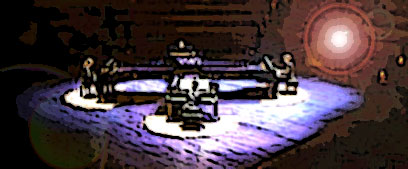
Canto Ostinato has 106 figures or parts and the players themselves decide on the stage how many times they repeat each section, etc. Ten Holt has said, “that what happens on-stage is like you're looking at an object from different angles, and the object is changed by the input people put into it. If you look at an object from above or below, it's still the same object, but the colours are different, the shapes are different, and that's what happens on-stage. So the players' input is very important.”
Canto Ostinato has become a metaphor for a new approach to design (Thackara, 2005). The composer, score, musicians, stage, and audience all interact in subtle, yet complex ways. Neither the musicians nor the audience knows exactly what will happen next as the arrangement is quite flexible. But, they are not flying blindly as there are principles and to a point, a score. The situation itself, in a sense, becomes designed.
Flows are not just one element of social organization, they are the expression of the processes dominating our economic, social and symbolic life — Manual Castells in The Rise of Network Society.
Notice how this relates to performance management. There is a space of flows in each performance situation — techniques, technologies, information, sounds, symbols, people, and the performance itself. Yet, like the Canto Ostinato, while there is a score (goal or blueprint); life unfolds anew, thus, each situation basically designs itself.
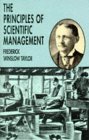
Frederick Taylor's Scientific Management tried to freeze the performance and then script it so that others had to follow it step-by-step. While Taylor's method focused primarily on the process itself; flow is more about helping people to develop themselves so that they can perform to changing conditions. The manager becomes more like Ten Holt in that he or she gives their workers a score to follow and conducts them, while at the same time giving them the freedom so that the situation is allowed to design itself, rather than just becoming a carbon copy.
Lesson Learned: Performance Management is not about you scripting people's lives, but rather about helping them to set goals, providing resources, and then coaching them to better performance.
Velocity and Viscosity
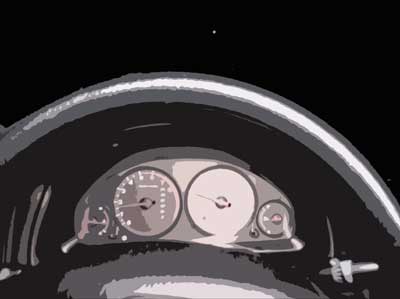
Velocity — the speed with which knowledge moves through an organization.
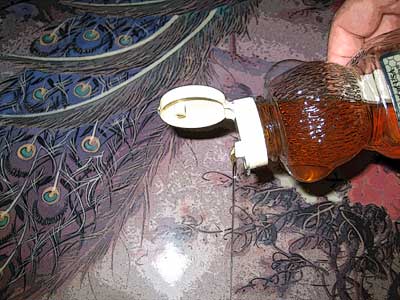
Viscosity — the richness or thickness of the knowledge transferred.
Knowledge requires viscosity, which uses rich sources and context; while information normally uses velocity for quick transfer. This is why knowledge can be so hard to come by at times — it takes time as knowledge, unlike information, is full of details and context; and at times, it can be quite subtle, thus one has to dig for it.
Performance Management is quite similar as deeply rooted belief systems cannot be removed with a quick memo, rather they require details and contexts to give it substance. For a good story of this concept, please read Davenport and Prusak's excerpt of Mobile Oil's tale of Velocity and Viscosity.
Lesson Learned: While information normally requires very little context, Performance Management normally requires greater context to to transfer the knowledge and skills that will lead to better performance.
The Human Side of Performance Management
Focusing on the four aspects of the human side of performance management, learning, reframing, flowing, and viscosity; allows you to grow your workforce so that they can in turn concentrate on the technical side.
Reference
Thackara, J. (2005). In The Bubble: Designing in a Complex World. Cambridge, Massachusetts: MIT Press World.
More Performance Essays
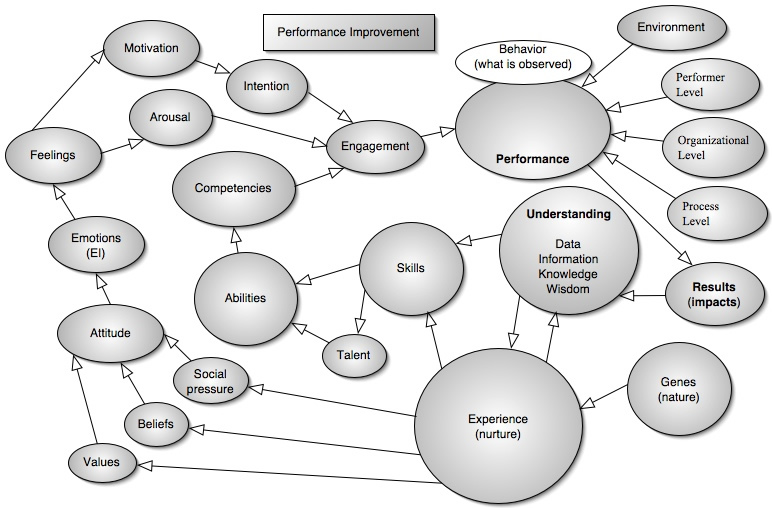
Click the performance concept map above or one of the links below
- Abilities
- Arousal
- Attitude
- Behavior
- Beliefs
- Competencies
- Engagement
- Environment
- EI
- Experience (nurture)
- Feelings
- Intention
- Motivation
- Nature (genes)
- Organizational Level
- Performance
- Performance Improvement
- Performance Management
- Performer Level
- Process Level
- Results
- Skills
- Social Pressure
- Talent
- Understanding
- Values