
Note: This site is moving to KnowledgeJump.com. Please reset your bookmark.
Mentoring with Social Media
While we traditionally think of mentoring as a long-term relationship where a mentor guides a protégé's career through face-to-face meetings, Special Project Mentoring helps to guide a protégé in relatively shorter time spans. This is because traditional mentoring programs are normally long-term relationships in which a mentor guides the protégé's career, whereas a special project mentor guides a person through a specific project or task..
In addition, Special Project Mentoring can also be accomplished through the use of social media. Just as Social Learning can take place through Social Media, the face-to-face environment of traditional mentoring can also be replaced with more versatile media, such as blogs, Virtual Meeting Places, and social sites. Thus, the use of these tools and applications allow mentoring to take place over greater distances and in different time periods.
Activities to Promote Social Learning Mentoring
Microblogs
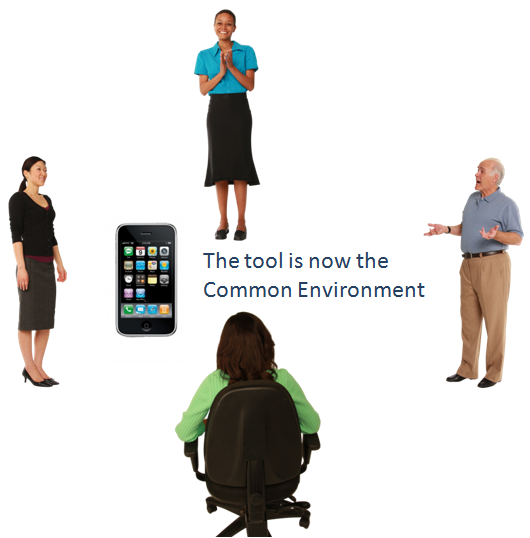 Social media microblogging tools, such as Twitter and Yammer, have the potential to become a new informal communication medium, especially for collaborative work within organizations (Zhao & Rosson, 2009). They also allow mentors and protégés to connect (collaborate) informally and send short messages that can be requests for help, answers, tips, etc. Thus they may be used as a just-in-time performance support tool.
During formal training sessions, the learners should use one of these tools to connect with each other, the instructors, and anyone else that is involved or has an interest in the tasks being taught. This will allow the learners to not only receive mentoring from experienced and knowledgeable sources, but also give them the opportunity to help mentor others once they have gained a level of proficiency.
Blogs
Blogs make nice additions to microblogging tools as it allows the mentor to write longer and more in-depth articles that can be read by a number of his or her protégés. The protégés and mentor can also make longer comments on the blog, in addition to using the microblogging tool for shorter and more informal comments.
Virtual Meeting Place
Virtual Meeting places probably come the closest to replicating traditional mentoring as it allows both the mentor and protégé to hold their discussions in a virtual face-to-face meeting style no matter how far they may be separated.
Social Sites
Social sites allow the mentors and protégés to keep in touch. In addition persons looking for mentors can scan potential mentors' social sites to see if they might be a good match for them.
Next Steps
Mentoring Resources
- What is mentoring?
- Types of mentoring
- Finding a mentor
- Mentor Development
- Creating a Mentoring Program
- Mentoring with Social Media
Return to the Leadership Training and Development Outline
Reference
Zhao, D., Rosson, M.B. (2009). How and why people Twitter: the role that micro-blogging plays in informal communication at work. ACM GROUP2009 Conference.