
Note: This site is moving to KnowledgeJump.com. Please reset your bookmark.
A Timeline of Management and Leadership
1880 - Scientific Management
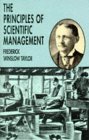
Frederick Taylor decides to time workers at the Midvale Steel Company for their rated output. His view of the future becomes foretelling:
“In the past man was first. In the future the system will be first.” - Frederick Taylor
In Taylor's scientific management approach, the managers were elevated in status, while the workers' roles were negated.
"Science, not rule of thumb, - Frederick Taylor
The decisions of supervisors, based upon experience and intuition, were no longer important. Employees were not allowed to have ideas or responsibility. Yet the question remains — is this promotion of managers to center-stage justified?
1929 - Taylorism
The Taylor Society publishes a revised and updated practitioner's manual: Scientific Management in American Industry.
1932 - The Hawthorne Studies
Elton Mayo becomes the first to question the behavioral assumptions of scientific management. The studies concluded that human factors were often more important than physical conditions in motivating employees to greater productivity.
1946 - Organization Development
Social scientist Kurt Lewin launches the Research Center for Group Dynamics at the Massachusetts Institute of Technology. His contributions in change theory, action research, and action learning earn him the title of the “Father of Organization Development:” the systematic application of behavioral science knowledge at various levels (group, intergroup, and total organization) to bring about planned change.
Lewin is best known for his work in the field of organization development and the study of group dynamics. His research discovered that learning is best facilitated when there is a conflict between immediate concrete experience and detached analysis within the individual. Also, see Organizational Behavior.
1949 - Sociotechnical Systems Theory
A group of researchers from London's Tavistock Institute of Human Relations, led by Eric Trist, studied a South Yorkshire coal mine in 1949. Their research leads to the development of the Sociotechnical Systems Theory, which considers both the social and the technical aspects when designing jobs. It marks a 180-degree departure from Frederick Taylor's scientific management. There are four basic components to sociotechnical theory:
- environment subsystem
- social subsystem
- technical subsystem
- organizational design
1954 - Hierarchy of Needs
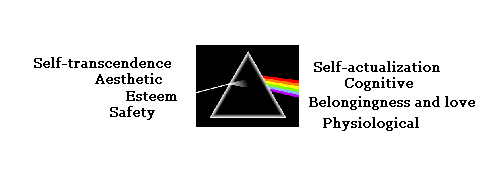
Maslow's hierarchy of needs theory is published in his book Motivation and Personality. This provides a framework for gaining employees' commitment.
1954 - Leadership/Management
Peter Drucker writes The Practice of Management and introduces the five basic roles of managers:
- Setting Objectives and Planning
- Organizing the Group
- Motivating and Communicating
- Measuring Performance
- Developing People (including himself or herself)
He writes:
The first question in discussing organization structure must be: What is our business and what should it be? Organization structure must be designed so as to make possible the attainment of objectives of the business for five, ten, fifteen years hence.
1959 - Hygiene and Motivational Factors
Frederick Herzberg developed a list of factors that are closely based on Maslow's Hierarchy of Needs, except it is more closely related to work. Hygiene factors must be present in the job before motivators can be used to stimulate the workers.
1960 - Theory X and Theory Y
Douglas McGregor's Theory X and Theory Y principles influence the design and implementation of personnel policies and practices.
Late 1960s - Action Learning
An Unheralded British academic, Reginald W. Revans was invited to try out his theories in Belgium — Action Learning — it leads to an upturn in Belgian's economy.
Unless your ideas are ridiculed by experts they are worth nothing. - the British academic Reg Revens, creator of action learning:
L = P + Q ([L] Learning occurs through a combination of programmed knowledge [P] and the ability to ask insightful questions [Q])
Note that Revens work has had little impact on this side of the ocean, although it remains one of the best ways to learn and to bring about productive change in the organization.
1964 - Management Grid
Robert Blake and Jane Mouton develop a management model that conceptualizes management styles and relations. Their grid uses two axes: "concern for people" is plotted using the vertical axis and "concern for task" is along the horizontal axis. The notion that just two dimensions can describe a managerial behavior has the attraction of simplicity.
1978 - Performance Technology
Tom Gilbert publishes Human Competence: Engineering Worthy Performance. It describes the behavioral-engineering model that became the bible of performance technology.
Gilbert wrote that accomplishment specification is the only logical way to define performance requirements. Accomplishments are the best starting points
for developing performance standards. In addition, accomplishments are the best tools for the development of performance-based job descriptions as they allow management to describe the measurement that is important to the organization, specific to the position, and observable.
1978 - Excellence
McKinsey's John Larson asks his colleague, Tom Peters, to step in at the last minute and make a presentation that leads to In Search of Excellence. Thus, Tom Peters spawns the birth of the “Management Guru Business.”
1990 - Learning Organization
Peter Senge popularized the Learning Organization in The Fifth Discipline: The Art and Practice of the Learning Organization. He describes the organization as an organism with the capacity to enhance its capabilities and shape its own future.
A learning organization is any organization (e.g. school, business, government agency) that understands itself as a complex, organic system that has a vision and purpose. It uses feedback systems and alignment mechanisms to achieve its goals. It values teams and leadership throughout the ranks. He called for five disciplines to become a learning organixation:
- System Thinking
- Personal Mastery
- Mental Models
- Shared Vision
- Team Learning
1995 - Ethics
On December 11, 1995, a fire burned most of Malden Mills to the ground and put 3,000 people out of work. Most of the 3,000 thought they were out of work permanently. CEO Aaron Feuerstein says, “This is not the end” — he spent millions keeping all 3,000 employees on the payroll with full benefits for 3 months until he could get another factory up and running. Why? He answers, “The fundamental difference is that I consider our workers an asset, not an expense.” Also, see Ethos and Leadership.
Business Process Management (BPM) - 2000
This is actually a slow advance in process management that has the following roots:
- Record Management
- Workflow - 1970
- Business Process Re-engineering (BPR) - 1990
- Business Process Management (BPM) - 2000
Drive Theory (Motivation) - 2009
While the concept of Drive in motivational theories has been around in since the early 1900s, and was researched in depth by Edward L. Deci, Daniel Pink popularized the concept with his book, Drive: The Surprising Truth About What Motivates Us.
Pink argues against old models of motivation driven by rewards and fear of punishment by extrinsic factors, such as money, and lays forth the premise that human motivation is largely intrinsic, and that the aspects of this motivation can be divided into:
- autonomy - the desire to be self-directed
- mastery - we want to get better at doing things
- purpose - connecting to a cause larger than yourself
This outstanding video illustrates the hidden truths behind what really motivates us at home and in the workplace.
Next Steps
Go to the main History page
Go to the main Leadership Site